The case against the divided tin
May 19, 2026
The first prototype was one tin with a partition down the middle. Cookies on one side, chicken on the other. It costs less to make, it takes up less shelf, and it photographs perfectly well.
We killed it, and the reason took an embarrassingly long time to put into words.
What a divider says
A divided container reads as one thing that has been portioned out. Somebody is getting the main part and somebody is getting the rest — and it is very clear which is which, because one of you owns the tin.
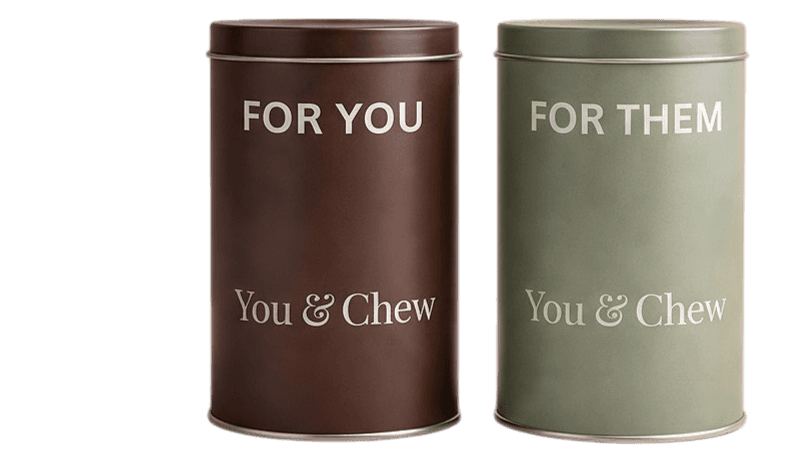
Two separate tins say something different. Two portions. Equally intended. Neither is a compartment of the other.
It is a small distinction and it is the entire product.
The part that is not sentimental
There is also a flatly practical argument, which is that chocolate is toxic to dogs and a partition is a thing that can be got past. A knocked-over tin, a lid left off, a dog who is better at problem-solving than you gave them credit for. Two sealed lids remove the scenario rather than managing it.
The safe version and the meaningful version turned out to be the same version. That does not happen often, and when it does you stop arguing and build it.
Why they still ship together
Nested in one lined box, because the opening is the point. Lift the lid and both halves are already there, side by side. Nothing to assemble, nothing to pair up yourself.
That image is the whole argument of the brand, and we would rather show it to you than explain it.