Never the cocoa tin
July 22, 2026

This is the least charming thing we will ever write, and it is the most important. The cocoa tin contains chocolate chip cookies. Chocolate is toxic to dogs. Under no circumstances does that tin get shared.
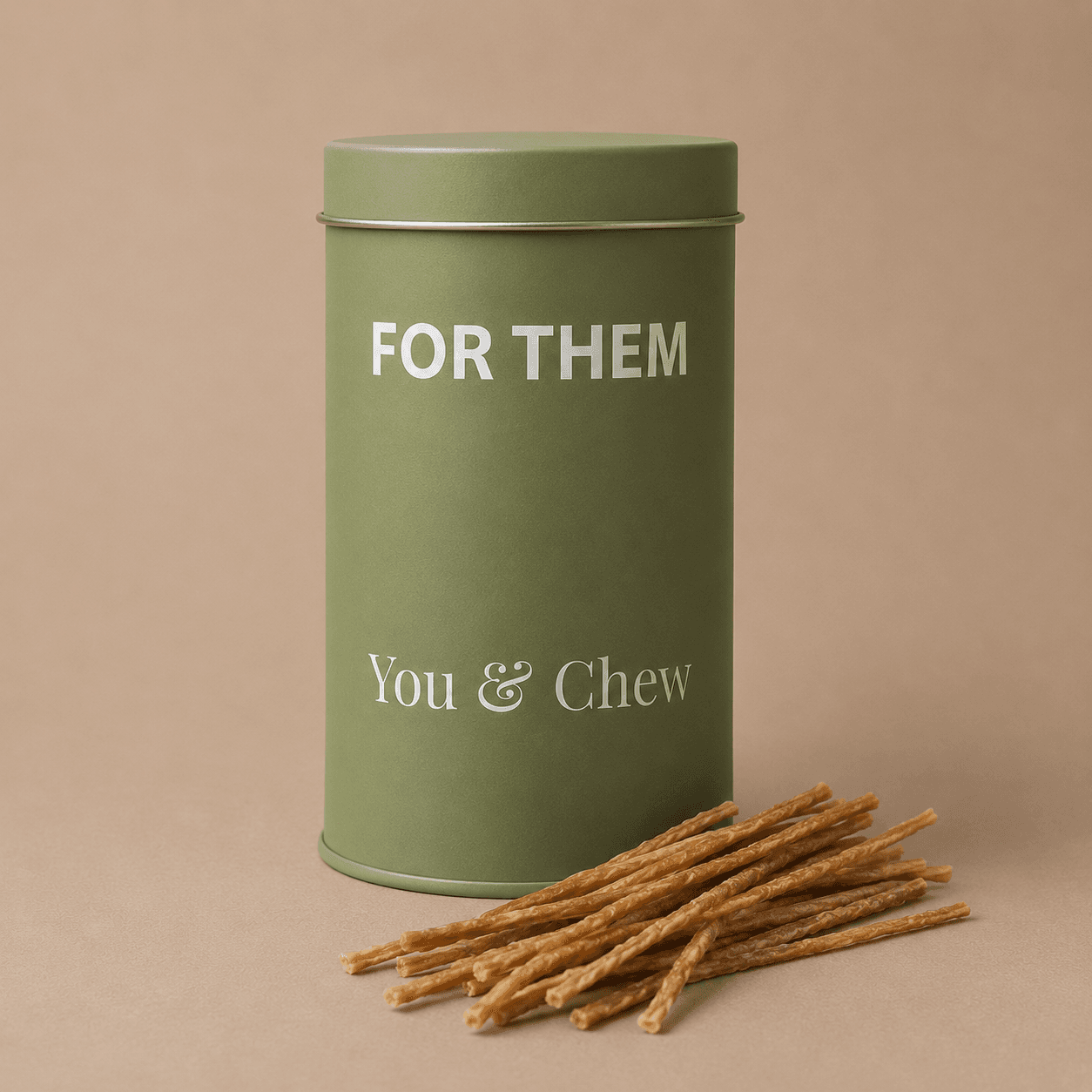
That is not a disclaimer bolted on afterwards. It is the reason the Duo Set is two separate sealed tins rather than one container with a divider. A divider is a thing that can be got past. A lid is not.
Why chocolate, specifically
Chocolate contains theobromine, which people metabolise quickly and dogs do not. It builds up. Dark chocolate and cocoa powder carry far more of it than milk chocolate, and a small dog needs far less of it to be in trouble.
Signs can take hours to show and include vomiting, restlessness, a racing heart and, at higher doses, seizures. If your dog eats chocolate, do not wait to see what happens — call your vet or an animal poison line and tell them the dog's weight, the type of chocolate, and roughly how much.
The others worth knowing by heart
Xylitol is the one that surprises people. It is a sweetener in sugar-free gum, some peanut butters, mints and baked goods, and in dogs it can cause a sudden drop in blood sugar and liver failure. It is dangerous at very small amounts. Read the label on any peanut butter before it goes in a toy.
Grapes and raisins can cause kidney failure, and the frightening part is that nobody has pinned down a reliable safe dose — some dogs react to very little.
Onions, garlic, leeks and chives damage red blood cells, cooked or raw, and powdered forms are more concentrated than fresh.
Macadamia nuts, alcohol, and raw yeast dough all belong on the same list.
Keep the number somewhere findable
Put your vet's out-of-hours number and an animal poison control line in your phone before you need them. In the US the ASPCA Animal Poison Control Center runs 24 hours on (888) 426-4435 — there is a consultation fee, and it is worth it at two in the morning.
Open both tins. Hand over what belongs to whom. That is the entire safety protocol, and it works because the two halves were never in the same container.
Not veterinary advice
We make treats, not diagnoses. This is general information, not a substitute for your vet, who knows your dog and we do not. If something is wrong — or you are unsure whether it is — call them rather than a website.